Concert hall
A typical concert hall or performing arts center installation takes about three hours.
The instrument
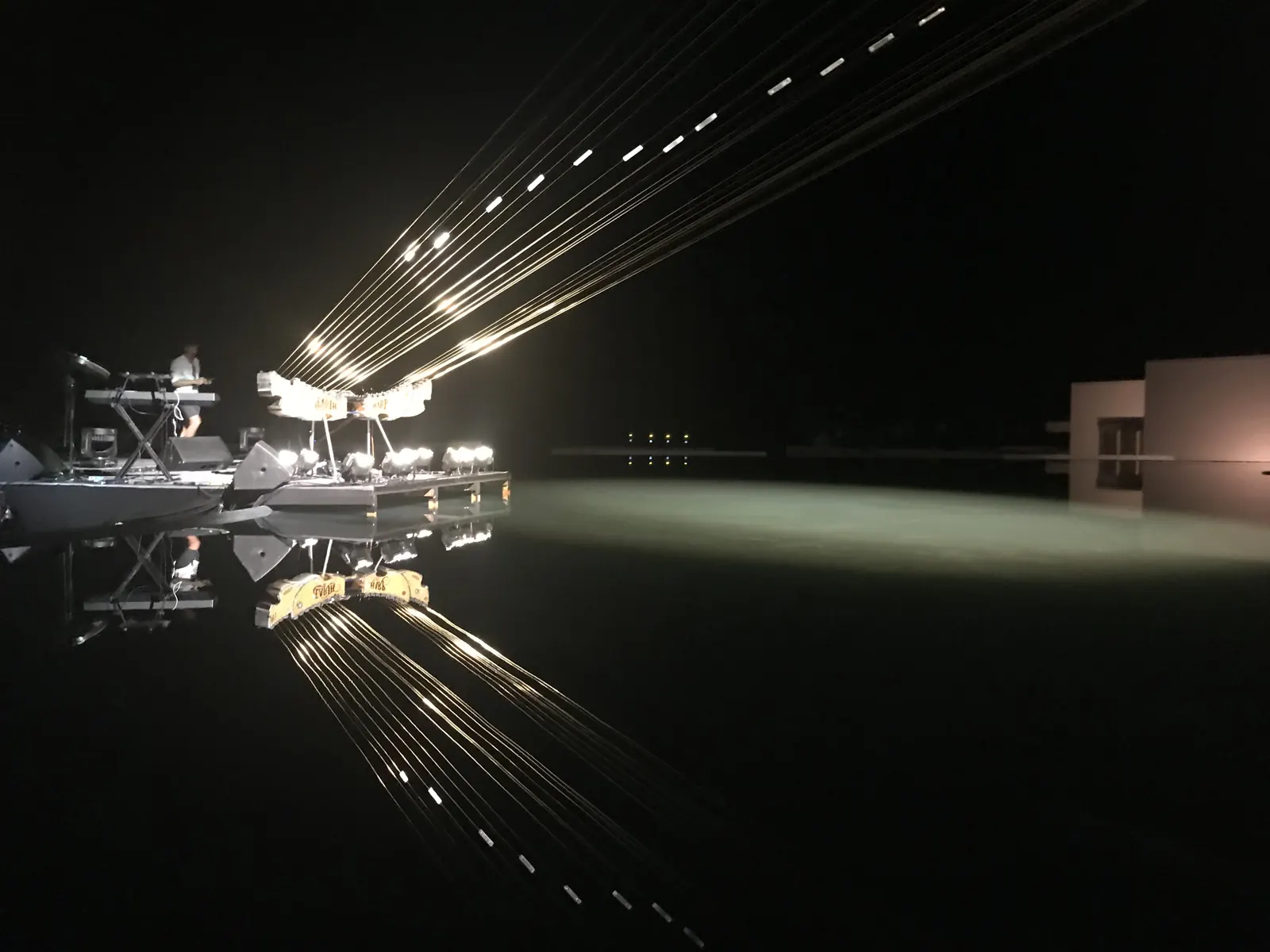
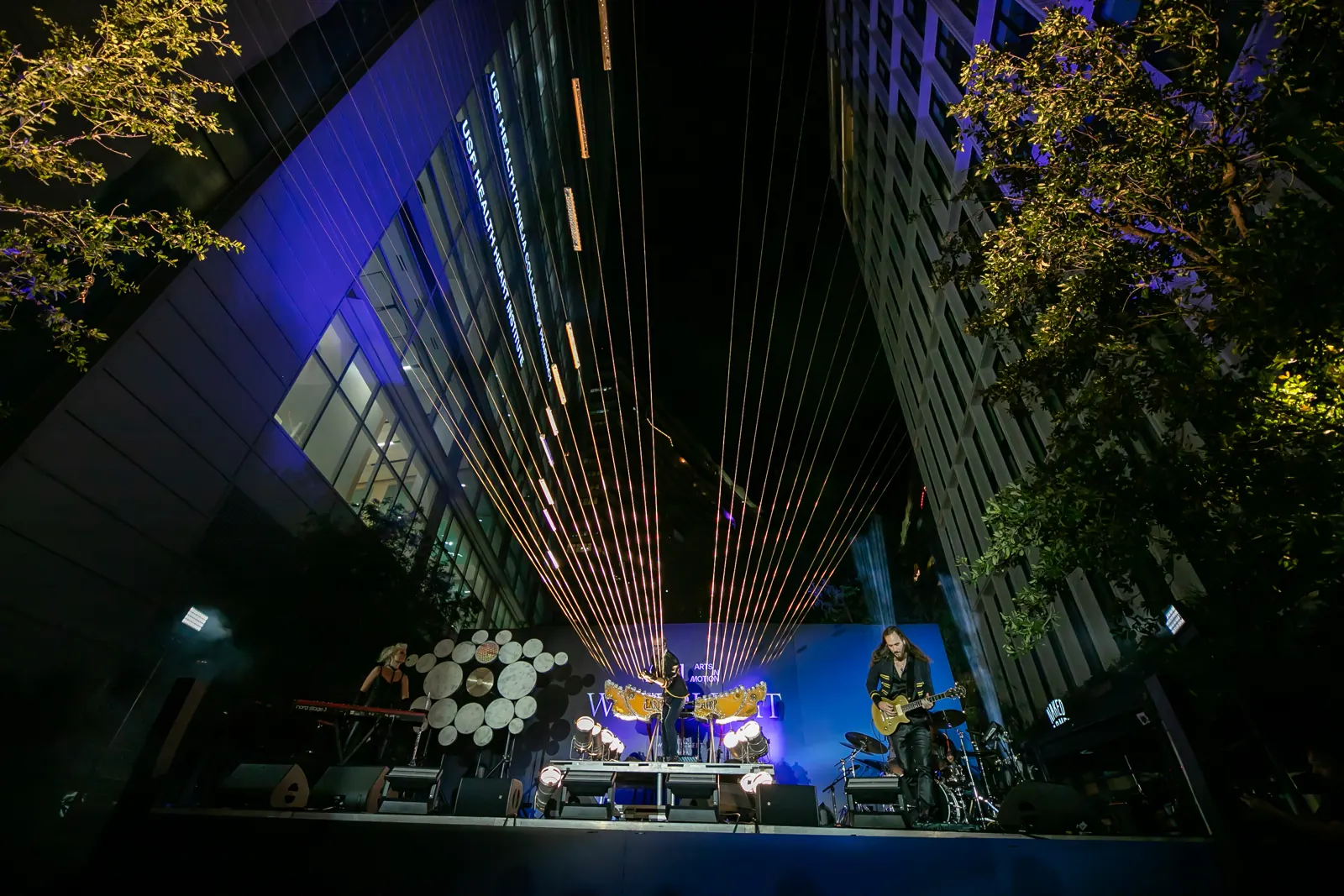
The Earth Harp mounts to the stage, and its strings shoot out over the audience and attach to the theater, the landscape or the architecture. The space itself becomes a giant stringed instrument.
How it works
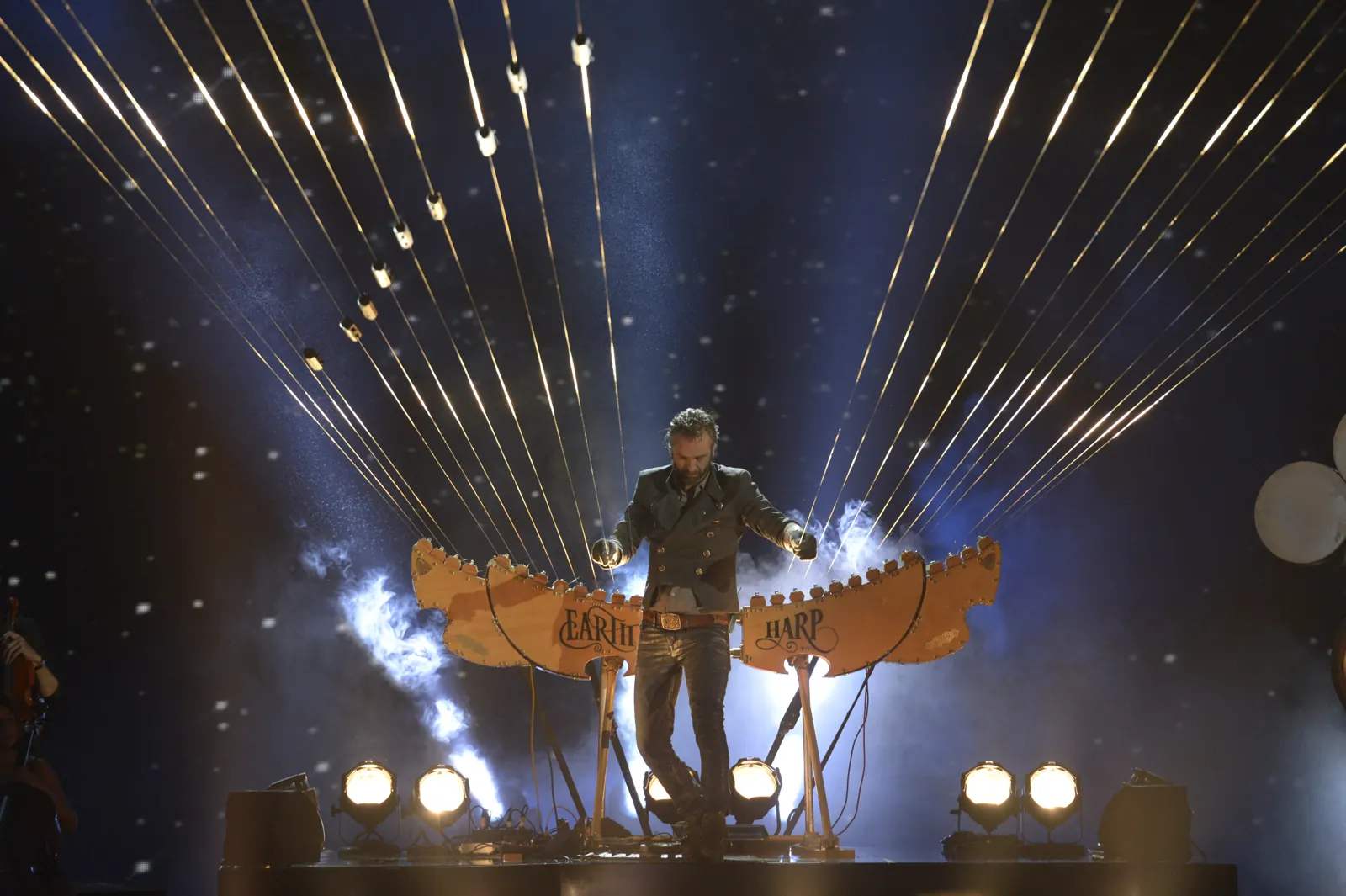
In a concert hall, the Earth Harp’s resonating chambers rest on the stage. The strings run from the stage out over the audience to the balcony or another part of the building. The theater becomes the instrument.
Outdoors, the strings can attach to a festival’s main stage, a truss tower, a bridge, a cliff or the top of a skyscraper, at lengths up to about 1,000 feet.
William has designed and built more than 50 different bridges and resonating chambers for the Earth Harp, and chooses from about 15 of his best designs for each installation.
Where it began
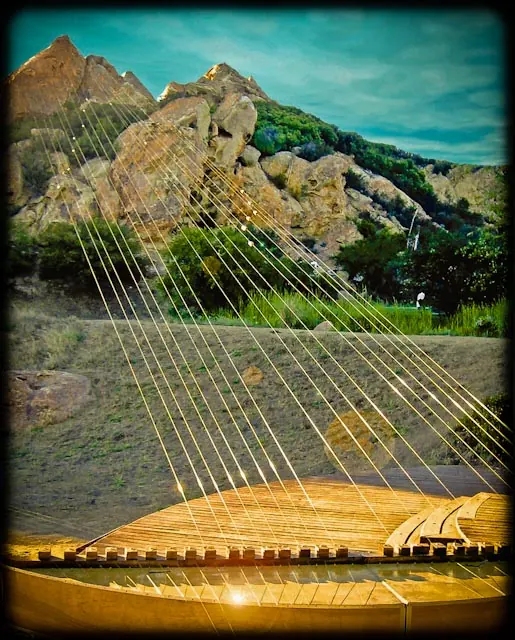
William built the first Earth Harp around the turn of the millennium. He mounted four large resonators and a bridge, roughly the size of two grand pianos, on one side of a valley and ran the strings almost 1,000 feet to the other side. The landscape became a giant harp.
Later, at the mountain installation, the strings ran from a stage to the top of a peak with caves near its summit. When the harp was played, the sound resonated inside the caves. The mountain was making music.
How it’s played
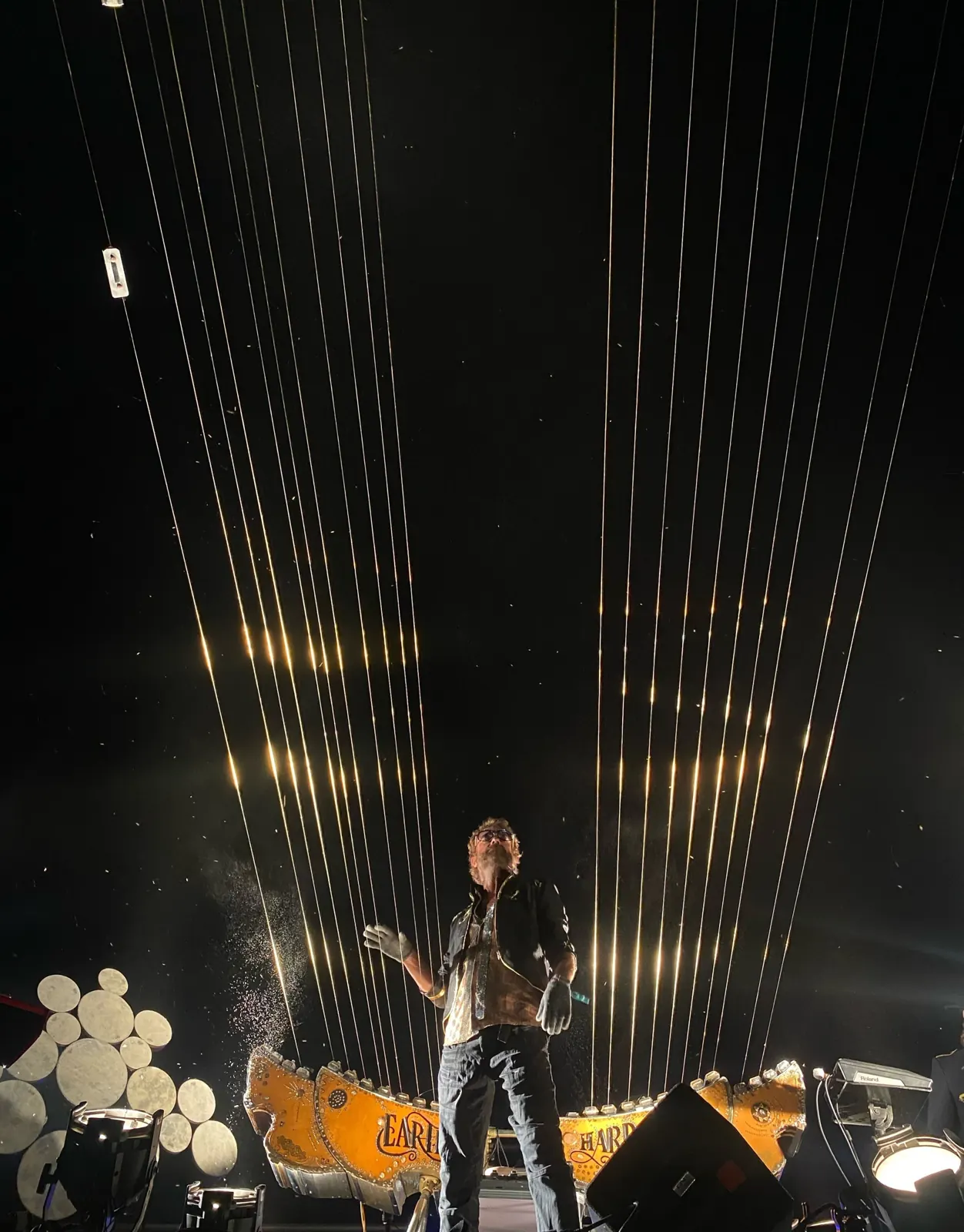
William plays the giant strings with violin rosin on his gloved fingers. Running his hands along a string sets up what’s called a compression wave, a vibration through the material of the string itself, a little like running a finger around the rim of a wine glass. It’s a different kind of vibration from a plucked or bowed string.
To tune it, he invented floating bridges that mount to each string. With long enough strings, the range runs from the highest note on a violin to the lowest note on a bass, and beyond.
It’s an acoustic instrument. The tones are picked up by standard microphones and sent through the sound system. No computers are involved in making the sound.
A typical concert hall or performing arts center installation takes about three hours.
The biggest installs combine rigging, climbing and tension work. The team calls it “Earth Harp-ing.”
William’s crew handles the rigging and provides a safety plan for each venue’s production team to review.
Where it has been strung
The Earth Harp has been installed all over the world, and each installation draws attention to the place where it’s played.

Booking
Tell us about your festival, city, venue or event. Matt Kendall at Concept Artists handles all Earth Harp bookings and will get back to you with options and pricing.